About the Tang Sancai Figurines in Luoyang
This artifact is Tang Dynasty female dancing figurine that shows a female dancer. These figurines were commonly placed in tombs and were made to reflect the lifestyle and culture of the times. During the Tang Dynasty, Luoyang was a majior cultural center connected to the Silk Road. Which created a space of different traditions, including dance and different clothing styles to mix together.
Dance and Society: Women in Court Performance
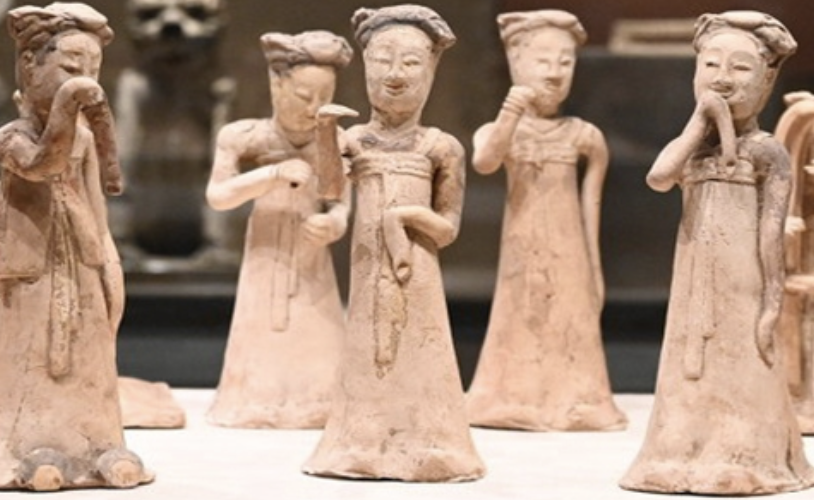
Tang Dynasty female dancing figurine. These figures were often placed in tombs and reflected court entertainment and cultural life during the Silk Road period. Source
Tang Sancai pottery is known for its three-color glaze, usually green, yellow, and white. The figurines are often detailed and lifelike, showing different movements, clothing, and social roles. Many of the figurines found in Luoyang include dancers, musicians, and servants. This shows how important performance and entertainment were during this era.
The dancer in this artifact also shows how many women played a major role in performance culture. The clothing is designed with long flowing sleeves, which helped emphasize dance movements. This reflects both artistic style and the influence of the Silk Road on cultural exchange, where foreign dance styles were introduced into China.1
Tang Sancai pottery is known for its three-color glaze. Which is usally green, yellow, and white. The figurines are often detailed and lifelike, showing different movements, clothing, and social class. Many of the figurines found in Luoyang include dancers, musicians, and servants. This shows just how important performance and entertainment were during this era.
The dancer represented in this piece of art is another way that many women have contributed to performance arts. The outfit worn by the dancer was created with flowing sleeves, which highlighted the motions made by the dancer in her routine. This was an example of both artistic style and the Silk Road’s impact on cultural traditions.1
These pottery figures are significant for the reason that they offer information about what people’s daily lives were like during the Tang Dynasty era. In essence, the figures are like visual historical documents from that period. The figures are also significant for the fact that they demonstrate the artistic prowess of the era. They were crafted through the use of a method where glazing was used to achieve a blending of colors such as green, yellow, and brown.
It is also crucial to note the realism of these figurines since the facial expression, pose, and costumes depict various social standings and roles within the society. For this reason, Tang Sancai Figurines are not only used for decoration purposes but can also be used to examine life and performances during the Tang period.2
Silk Road Influance and Cultural Exchange
The Tang Dynasty was known for being very open to outside cultures, which relfected in these dance figurines. Instead of just showing just the traditional Chinese styles, many figurines inclue features influances by Centeral Asia and other regions connected through the Silk Road. During this time dance became an important part of court life and entertainment. The woman were often the main performers. This is why there are more female dance figurines then maleones. Women were commonly trained in music and dance and were seen as central to ciltural perforances, especially in elite and court settings.
The Silk Road played a major role in shaping this. As different cultures interacted through trade, new styles of music, dance, and clothing were introduced into China. Some Tang figurines even show performers connected to Central Asian traditions, which shows how foreign influence shaped performance culture.
With Women often being associated with beauty, elegance, and artistic skill, and their perforamces were ment to display these qualities. Their clothing, especially how they incorporated the long sleeves as part of their dance attire and choreography. Even the Silk garments that were worn was digned to highlight movement and make dances more visually expressive. This is why the posture, clothing, motion captured by the figurines is important. It gives us a look into the type of dances they would do, and sometimes the stories they would tell through dance.
Conclusion
Female dancers in Tang Sancai pottery figurine, show how women wear central to performance, culture, expression, and social life during the Silk Road era.
The description of female figures having “High hair buns and full sleeves” and standing in a graceful and elegant posture shows how women were represented in tongue, Dynasty society, especially in relation to dance and performance. These features were not random. They were ment to highlight ideals of beauty trends. They reflect womens beauty, refinement, and control. The high hair buns and detailed hairstyles, reflect status in fashion.
Bibliography
- Liu, Fei. “The Inheritance of Tang Sancai Pottery Figurines in Luoyang: The Integration of Traditional Handicrafts and the Regional Cultural Background of Social Transformation.” Edelweiss Applied Science and Technology, 2024.
-
Liu, Fei. “The Inheritance of Tang Sancai Pottery Figurines in Luoyang: The Integration of Traditional Handicrafts and the Regional Cultural Background of Social Transformation.” Edelweiss Applied Science and Technology, 2024. ↩ ↩2
-
Hansen, Valerie. The Silk Road: A New History. Oxford University Press, 2012. ↩